

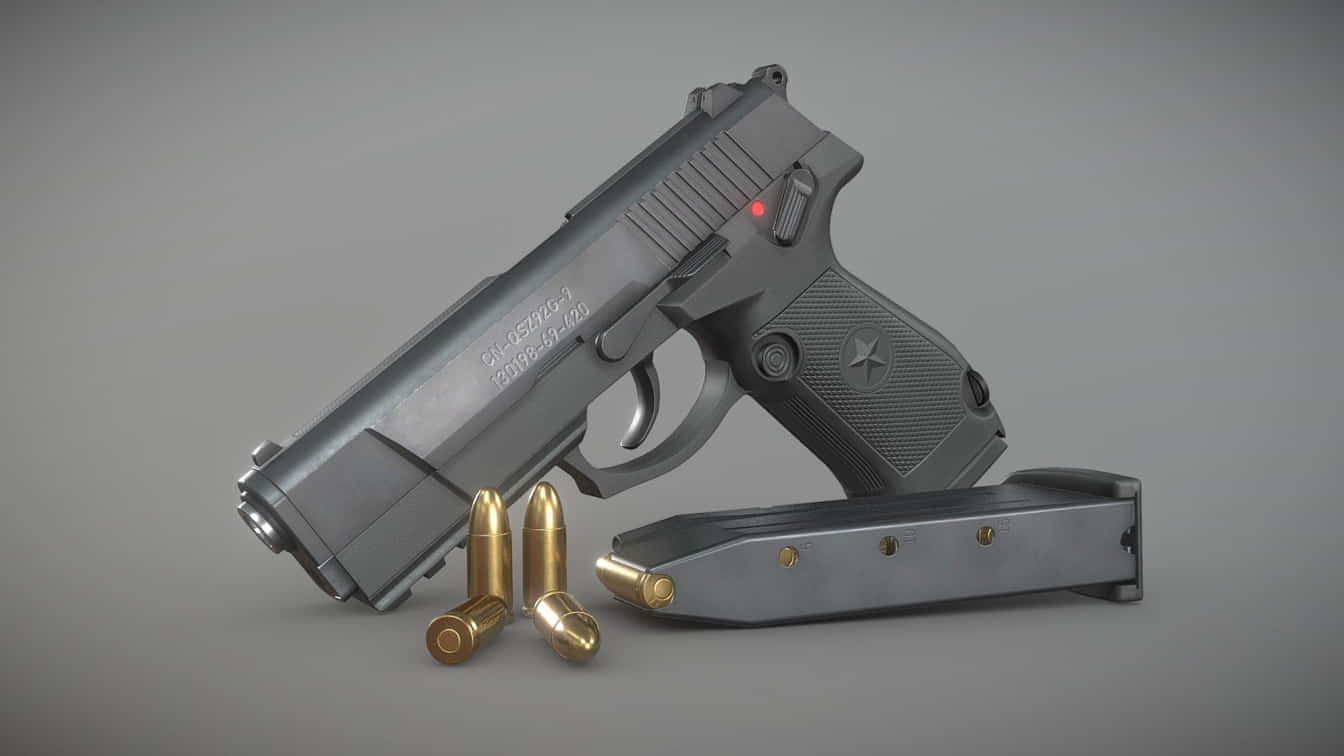
The Norinco CF98 occupies a unique place in the modern handgun landscape. It is a pistol that reflects the evolution of China’s small-arms development during a period when the nation sought to modernize rapidly while remaining independent from Western design influence. The CF98 is often overshadowed by more recognizable service pistols, yet its engineering, historical context, and practical performance make it an intriguing subject. Examining it part by part reveals not only what the pistol is but why it was built the way it was.
Origins and Development
The CF98 traces its origins to China’s effort to transition from older Type 54 Tokarev-pattern pistols toward designs consistent with the global shift to high-capacity service handguns. Norinco engineers faced a dual challenge. They needed a platform capable of chambering both the Chinese standard 5.8×21mm cartridge and the globally dominant 9×19mm, and they needed to craft a pistol that could be manufactured in volume with domestic materials and industrial capabilities.
In the late 1990s, Norinco pushed forward with a modernized frame concept that borrowed from polymer manufacturing trends sweeping the industry. The intent was never to copy the Glock or Beretta patterns directly. Instead, the designers aimed to integrate familiar Western ergonomics with mechanical systems that were uniquely Chinese. The resulting pistol, the QSZ-92, would serve Chinese military and police forces, while the CF98 variant was engineered specifically for export.
Understanding that distinction is essential. The CF98 is closely related to the QSZ-92, but it uses the more export-friendly 9×19mm caliber and simplified manufacturing methods to meet international commercial and military requirements. The CF98 represents China’s push to enter the global arms market with a modern, reliable, and affordable pistol.
Design Philosophy and Operating System
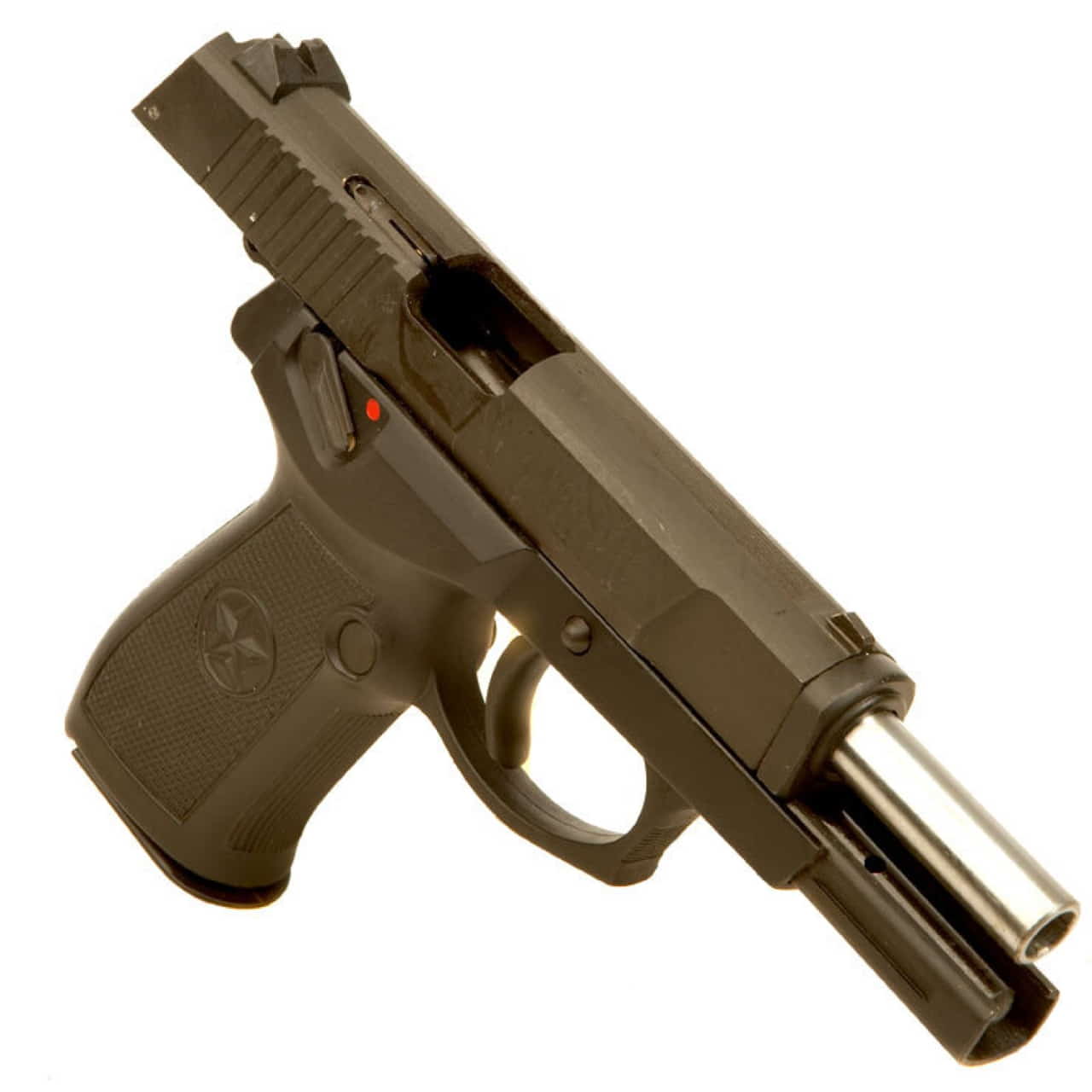
What makes the CF98 stand out is its rotating-barrel locking system. Unlike the more common Browning tilting-barrel system, the rotating configuration uses a cam track carved into the barrel extension that interfaces with a central lug inside the frame. As the pistol cycles, the barrel rotates approximately a quarter-turn, unlocking from the slide in a smooth, controlled motion.
This system was chosen deliberately. Rotating barrels offer theoretical advantages in recoil mitigation, as the energy of recoil is dispersed through a rotational action rather than a purely rearward snap. While the difference is not dramatic in real-world firing, it contributes to a softer recoil impulse that many shooters notice immediately.
They were willing to stray from convention because they believed the mechanical advantages justified the added complexity. In a world where many handguns had converged on very similar operating principles, China went in a different direction. The CF98’s rotating-barrel system places it alongside designs like the Beretta PX4 Storm and the early Steyr models, though its execution remains distinctly Chinese.
Frame Construction and Ergonomics
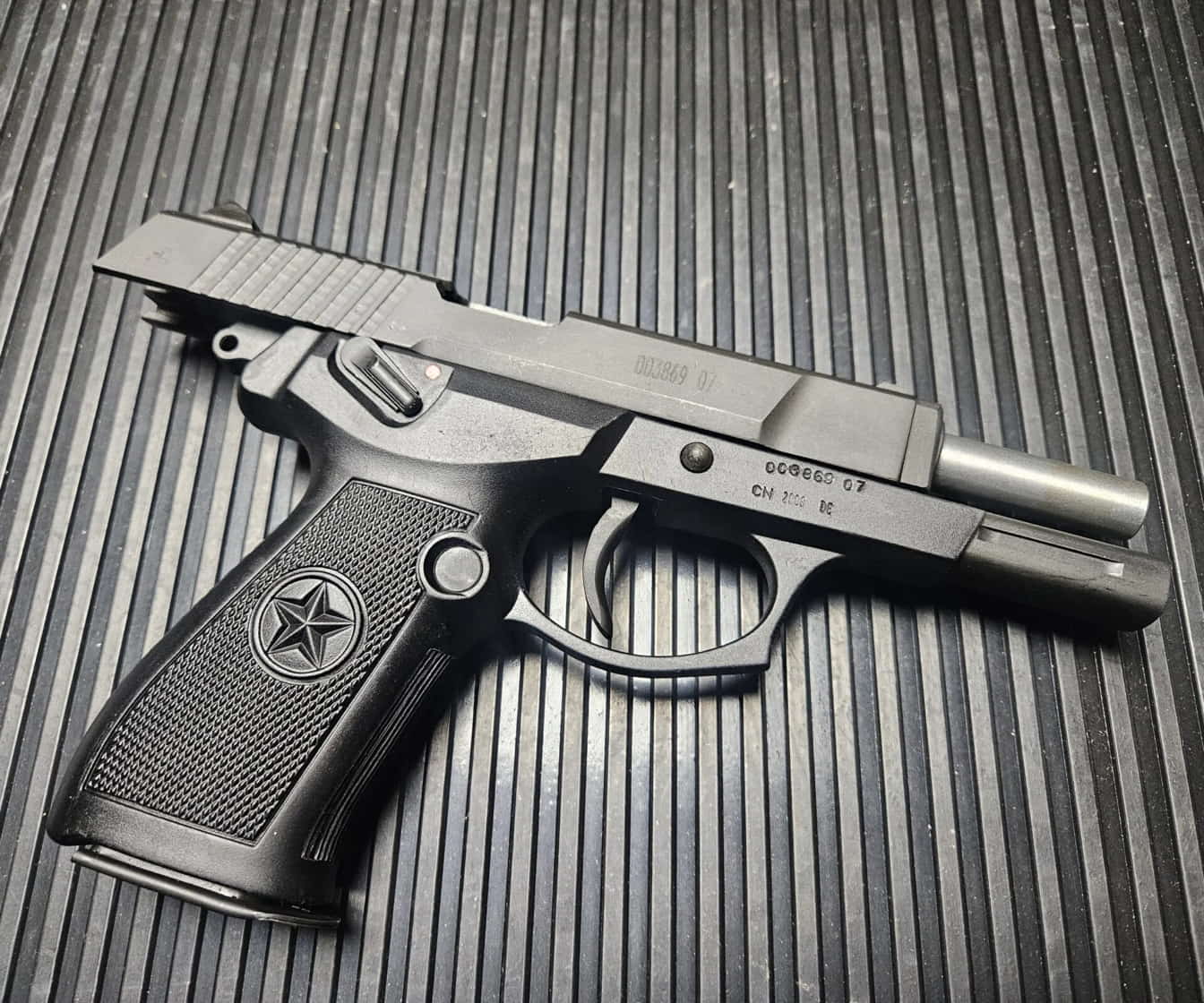
The CF98 uses a polymer frame that reflects China’s early experimentation with synthetic materials in firearms. The polymer is not as refined as Western counterparts, but it is durable and resilient. The grip frame has a noticeably high arch and a somewhat angular geometry. Shooters often describe the grip as unconventional, but it serves an important purpose. It places the bore axis lower relative to the shooting hand, which enhances recoil control and overall stability.
Ergonomic refinements also reflect the dual-purpose nature of the weapon. The pistol had to be simple enough for mass production and broadly comfortable for a wide range of users. Texturing is minimal, but the grip contour guides the hand consistently into a natural shooting position. The trigger guard is cut deeply, allowing a high hold, which complements the rotating-barrel recoil characteristics.
Every contour and angle serves the dual purpose of functionality and simplified molding. It is an industrially efficient design meant to satisfy military contracts and civilian markets alike.
Trigger System and Controls
The CF98 employs a double-action/single-action trigger with a heavy initial pull followed by a lighter, crisp break in single-action mode. The double-action stroke is long and deliberate, matching the philosophy of many service pistols from the same era. Norinco maintained this architecture because the pistol was intended for users who might have limited firearms training. A heavy initial pull reduces the chance of negligent discharge under stressful conditions.
Controls are uncomplicated. The safety lever doubles as a decocker, allowing the shooter to safely lower the hammer without firing a round. The magazine release is located behind the trigger guard and is easy to reach without shifting the firing grip. The slide stop is basic but functional, providing reliable engagement after the last round.
It is built to be predictable and consistent. The trigger characteristics reflect a service-weapon mentality focused on safety, reliability, and straightforward operation rather than competition-grade refinement.
Magazine Design and Capacity
One of the most distinctive elements of the CF98 is its modular magazine system. The pistol uses a double-stack magazine with a 15-round capacity in 9×19mm. The magazine body is steel, but the baseplate and follower reflect China’s early experiments with polymer components. The magazines are lightweight, reliable, and easy to disassemble.
What makes the CF98’s magazine noteworthy is how it represents a shift in Chinese handgun philosophy. Earlier pistols like the Type 54 used single-stack magazines that limited capacity significantly. Transitioning to high-capacity double-stack magazines signaled China’s acknowledgment of the global standard for service pistols. This shift mirrors the worldwide movement toward higher ammunition capacity for both military and police applications during the late twentieth century.
Field Stripping and Maintenance
Field stripping the CF98 is straightforward. The takedown lever on the left side of the frame rotates downward, allowing the slide assembly to move forward off the frame. From there, the recoil spring and rotating barrel can be removed as a single unit. The system is engineered to minimize the number of small parts and retain critical components within subassemblies.
Norinco designed the pistol for large-scale deployment among varied skill levels. A soldier or police officer with minimal training can disassemble and clean the firearm in minutes. Fewer small parts also translate into lower production costs and reduced likelihood of field malfunctions.
Performance and Reliability
The CF98’s reliability record is generally positive. It handles a wide range of commercial 9×19mm ammunition types without significant issues. The rotating-barrel system tends to reduce muzzle rise, giving the shooter faster follow-up shots compared to many tilt-barrel pistols. In a controlled shooting environment, the recoil impulse feels smoother and more linear.
Accuracy is serviceable rather than exceptional. The pistol was not built with match precision in mind, but the rotating system helps maintain consistent lockup, which contributes to reliable shot placement at typical defensive and service distances.
The CF98 is not a premium handgun, nor is it meant to be. Its value comes from providing solid reliability, adequate accuracy, and durable construction at a price point far below many Western competitors. For militaries and police forces with limited budgets, this makes the CF98 an attractive option.
Role in the Global Arms Market
Norinco weapons occupy a controversial yet undeniable presence in the global market. The CF98 plays a role in that landscape as an export-focused sidearm designed to compete with low-cost service pistols from Eastern Europe and the Middle East. Many nations purchase the CF98 for police forces, auxiliary units, and security agencies where cost and durability outweigh the need for premium refinement.
The CF98 also appeals to civilian shooters in countries where Norinco imports are permitted. Its low price, unique mechanical system, and robust construction make it a curiosity for collectors and a practical tool for budget-minded gun owners.
The pistol is not designed to dominate any one category. Instead, it fills a niche where reliability and cost efficiency matter more than cutting-edge performance.
Strengths and Limitations
The CF98’s strengths lie in its durability, simplicity, and distinct operating system. It is built to withstand heavy use and adverse conditions. Its polymer frame, rotating barrel, and robust internals create a platform that can function reliably with minimal maintenance. The recoil characteristics are smooth, the capacity is competitive, and the overall package performs consistently within its intended role.
However, the pistol is not without limitations. The trigger is heavy, the ergonomics polarize shooters, and the overall fit and finish lag behind Western handguns. The CF98 is also not widely supported by aftermarket parts, which limits customization options. These factors reflect its position as a utilitarian tool rather than a refined shooting instrument.
Final Evaluation
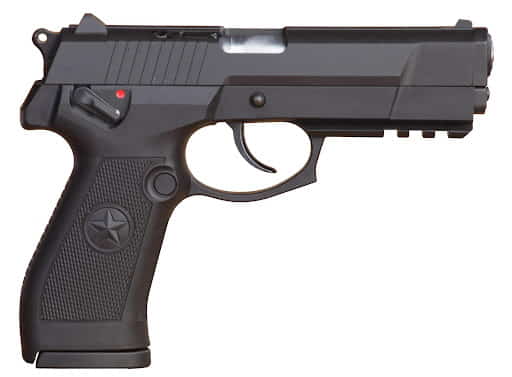
The pistol represents China’s transition into modern handgun design and their effort to create an export-friendly sidearm capable of meeting international standards. It is not a perfect gun, nor is it meant to be. Its value lies in its rugged construction, distinctive engineering choices, and ability to deliver reliable performance at an accessible price.
The CF98 remains a significant milestone in Chinese firearm development. It bridges the gap between old-world service pistols and modern polymer-frame designs. More importantly, it shows how Norinco interprets global trends through its own industrial capabilities and strategic priorities. In that sense, the CF98 is not just a handgun. It is a statement of technological direction, market ambition, and practical utility.