The world is not stumbling into war by accident. It is moving toward it because more states now believe force is useful, manageable, and, under the right conditions, politically rewarding.
That is the central fact behind global conflicts in 2026.
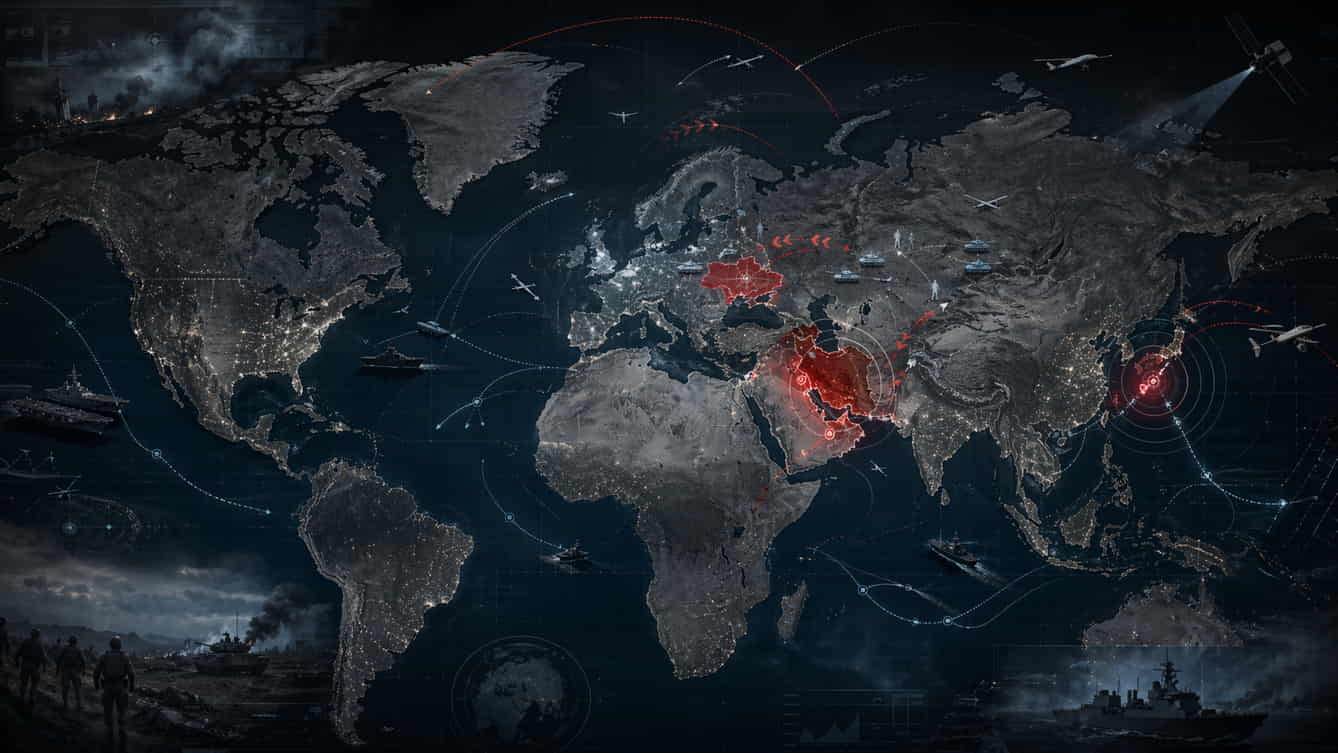
What is unfolding across the Middle East, Eastern Europe, and the Indo Pacific is not a random accumulation of crises. It is the visible expression of a deeper strategic breakdown. The system that governed international competition for much of the post Cold War period has not disappeared overnight, but its restraining power is plainly weaker. Governments no longer assume that trade will soften rivalry. They no longer trust institutions to contain escalation. They no longer see military force as a last resort in quite the same way.
That is the real change.
The problem is not simply that the world has become more violent. The problem is that violence is becoming normal again as an instrument of statecraft. Once that happens, the threshold between pressure and war begins to collapse. Sanctions lead to sabotage. Sabotage leads to strikes. Strikes lead to counterstrikes. A crisis that would once have been frozen now begins to move.
The war involving Iran is the clearest sign that old ceilings are breaking. Ukraine is the clearest sign that modern war does not end quickly just because it becomes ruinously expensive. Taiwan remains the clearest sign that the next great power confrontation may already be underway in everything but name.
These are not separate stories. They are connected theaters within the same strategic age.
The Real Crisis Is the Erosion of Restraint
For years, the international system functioned inside a dangerous but workable contradiction. Major powers competed intensely, often through sanctions, cyber operations, covert action, proxy warfare, and economic coercion, yet they still behaved as if there were boundaries that should not be crossed lightly. Competition was sharp, but restraint still had political value.
That restraint is eroding.
In 2026, the world looks less like an order than a contest among actors who increasingly assume that time is working against them. The United States remains the most powerful military actor on earth, but its supremacy is more openly contested and less psychologically accepted than it was. China is stronger, less patient, and less willing to operate inside a system largely written by others. Russia has shown that it is willing to absorb extraordinary punishment in exchange for strategic depth and political leverage. Regional powers, among them Iran and Turkey, continue to test how far influence can be pushed before it triggers a wider response.
The deeper problem is not rivalry itself. Great powers have always rivaled one another. The deeper problem is that states increasingly doubt that their rivals still share even a minimal interest in preserving limits. They assume bad faith. They assume hidden intent. They assume that today’s pressure is preparation for tomorrow’s encirclement.
Once that mindset takes hold, even defensive moves acquire offensive meaning.
That is how systems become unstable. Not because every actor wants total war, but because too many conclude that waiting will leave them weaker than acting. Global military spending reached $2.718 trillion in 2024, according to SIPRI, the steepest year on year increase recorded since at least the end of the Cold War.
Why Global Conflicts Feel Sharper in 2026?
There are several reasons today’s conflicts feel more dangerous than they did even a few years ago, and none of them is superficial.
The first is speed. Drones, precision munitions, cyber disruption, and persistent surveillance have compressed strategic time. Leaders are now forced to make decisions faster, with less certainty, and under heavier public pressure. In many crises, diplomacy no longer arrives before violence. It arrives after the first exchange.
The second is economic fragmentation. The old globalization argument held that deeply integrated economies would avoid major war because the costs would be too high. That was always more fragile than it appeared. Before 1914, Europe was economically connected too. Interdependence did not prevent catastrophe then, and it is not a guarantee now. In 2026, export controls, sanctions, industrial policy, shipping restrictions, and supply chain redesign have become standard tools of power. Once economic confrontation becomes routine, military confrontation no longer feels like a leap into the unknown. It feels like escalation along an already active spectrum.
The third is domestic political weakness. Inflation, social anger, elite fragmentation, and leadership vulnerability narrow the room for strategic patience. Hardline action can look attractive not because it is wise, but because it appears decisive. Governments under internal strain often become less tolerant of external humiliation.
The fourth is a dangerous faith in controlled escalation. Too many decision makers appear to believe they can strike, punish, and then contain the consequences. Sometimes they can. More often, they discover that wars do not remain calibrated simply because their architects intended them to be.
That is why 2026 feels different. The danger lies not only in the number of active crises, but in the spread of a political culture that treats force as usable before it is truly necessary.
Iran and the Middle East: A Regional War With Global Reach
For years, Iran was described as a potential flashpoint. That language now feels outdated. Iran is no longer a future contingency. It is part of an active war environment.
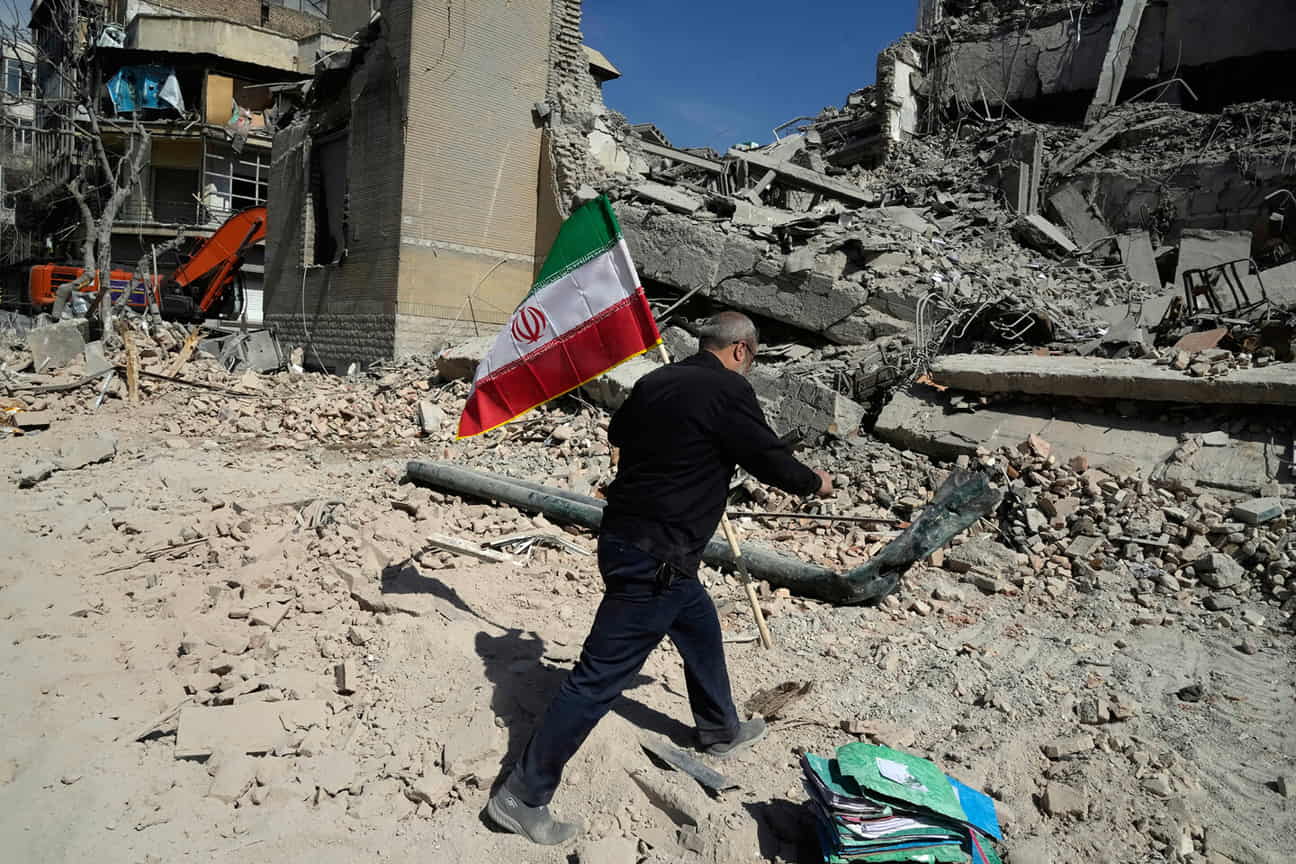
The conflict involving Iran, the United States, and Israel has moved beyond shadow war and covert pressure. Iran has been struck directly, and damage projections approaching 270 billion dollars indicate the scale of what is at stake. That figure matters not only because of buildings destroyed or facilities damaged. It points to something more consequential: the deliberate targeting of a state’s capacity to function, produce, transport, export, recover, and endure.
That is one of the defining features of modern war. Powerful states increasingly seek to inflict system wide damage without paying the political and military price of full occupation. Military targets remain central, but so do ports, fuel networks, industrial nodes, power systems, logistical arteries, and revenue generating infrastructure. The battlefield is no longer just where armies meet. It is where a state’s resilience can be broken.
Why the Iran War Matters Far Beyond Iran?
The war around Iran matters globally for three basic reasons.
First, it demonstrates that direct state on state escalation is more thinkable than it was ten years ago. A confrontation once managed through proxies, sabotage, and deniability has become more open, more destructive, and more politically difficult to reverse.
Second, it shows how kinetic and economic coercion now work together. Bombing alone causes damage. But bombing combined with financial stress, export disruption, shipping risk, insurance shocks, and investor retreat creates a far broader strategic impact. In modern conflict, the true effect of military action is often measured less by blast radius than by systemic paralysis.
Third, it confirms that punishment does not necessarily produce submission. Iran has not ceased to be dangerous because it has been hit. It retains missiles, regional influence, asymmetric tools, maritime leverage, and the capacity to generate pressure through indirect networks. Severe damage can degrade a state. It does not automatically disarm its political will.
That is one of the hardest lessons of the current era. Decision makers still talk as if sufficiently precise violence can force a clean strategic outcome. Increasingly, it does not. It generates adaptation instead.
Iran’s Strategy Is Built to Survive Pressure
Iran does not need to defeat the United States or Israel in conventional military terms to remain strategically relevant. It needs to make coercion costly, prolonged, and politically corrosive for those applying it.
That is why Iran does not seek symmetry. Its doctrine is built around missiles, drones, hardened facilities, dispersed assets, maritime disruption, and allied nonstate actors who can widen the geography of pressure. This is not simply a sign of weakness. It is a doctrine of endurance designed for a world in which survival can itself become a form of strategic success.
Israel reads the problem through a different but internally coherent lens. From its perspective, Iran’s missile inventory, nuclear trajectory, and regional network are not abstract risks to be managed indefinitely. They are accumulating threats that become harder to neutralize with time.
The United States sees the issue more broadly still. Washington wants to limit Iranian influence, reassure regional allies, preserve freedom of navigation, and prevent the emergence of a hostile balance in a strategically vital region. At the same time, it wants to avoid another massive, open ended ground war in the Middle East.
Each side is acting rationally within its own security logic. That is what makes the conflict so dangerous. Escalation is often most likely not when actors are irrational, but when competing rationalities become irreconcilable.
Hormuz and the Price of Regional War
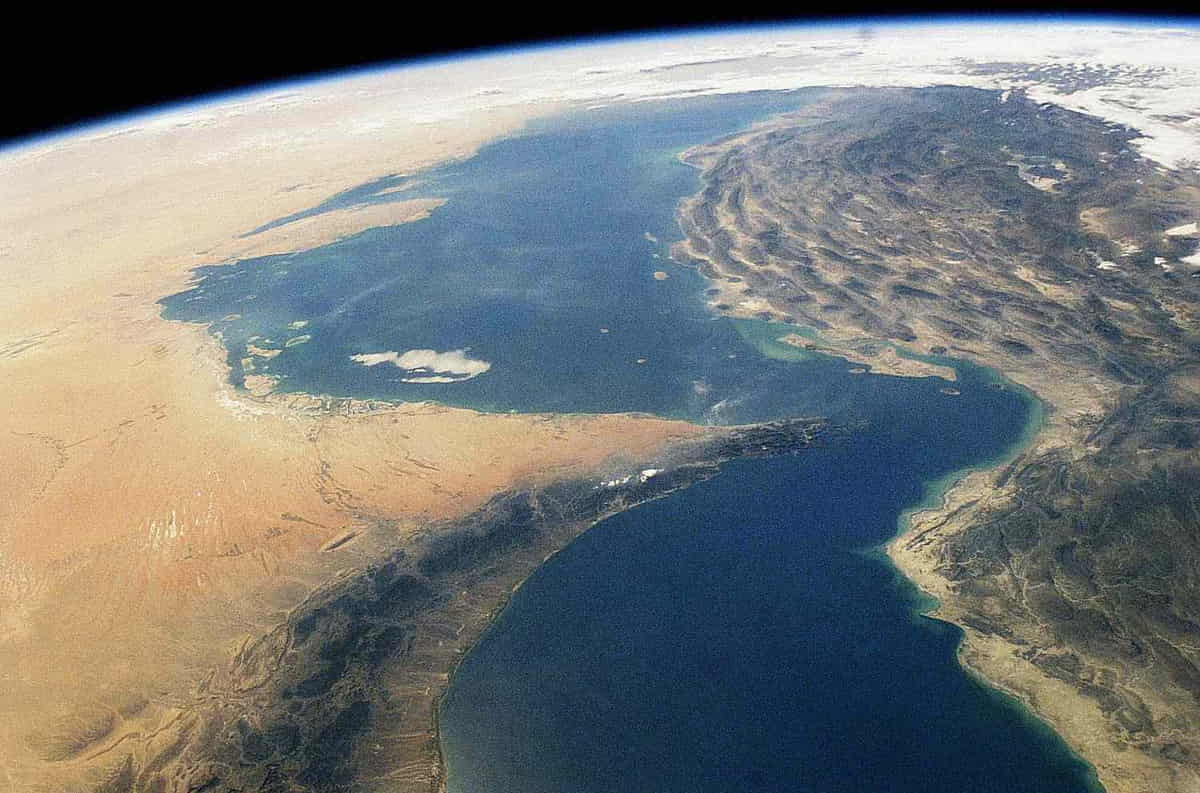
Every major crisis in the Gulf eventually returns to the same question. Will energy continue to flow?
In the case of Iran, that question has global significance. The Strait of Hormuz remains one of the world’s most important energy chokepoints. A serious disruption there would not be a local disturbance. It would be a worldwide economic shock. Fuel prices would spike. Shipping costs would rise. Insurance markets would tighten. Inflationary pressure would spread across economies already under stress. The U.S. Energy Information Administration estimated that roughly 20 million barrels per day moved through the Strait of Hormuz in 2024, equal to about one fifth of global petroleum liquids consumption.
That is why the war around Iran cannot be treated as a regional episode with regional consequences. Europe feels it through energy prices and market volatility. Asia feels it through shipping exposure, supply chains, and import costs. Developing economies feel it through currency weakness, inflation, and reduced strategic room to absorb shocks.
Modern conflict increasingly works in this way. Violence may begin locally, but the consequences travel through systems that are global.
Ukraine and the Return of Endurance
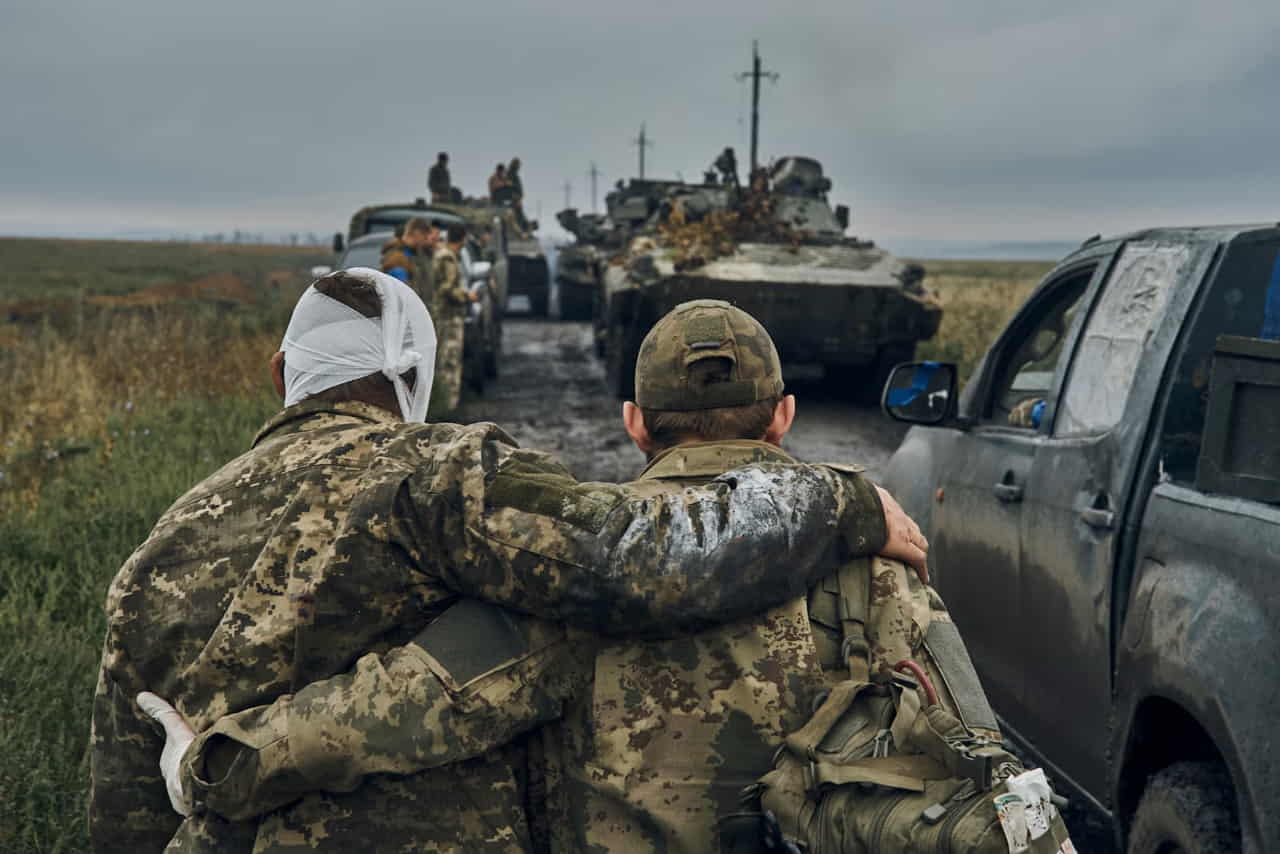
If the Iran war shows how rapidly a regional conflict can widen, Ukraine shows how stubborn modern war becomes once it settles into attrition.
Ukraine did not become a short war decided by shock, precision, and speed. It became a long war of adaptation. Front lines hardened. Drones multiplied. Artillery remained decisive. Logistics, repair, manpower, industrial output, and political endurance returned to the center of military relevance.
That matters because Ukraine shattered one of the most comforting illusions of the modern era: that advanced technology had somehow removed the brutal fundamentals of war.
It has done no such thing.
Armies still require shells, transport, engineering, replacement systems, reserves, command resilience, and industrial depth. States still need factories. They still need time. They still need a society prepared to absorb losses longer than expected. In prolonged wars, endurance often defeats expectation.
Ukraine has also delivered a wider lesson. Sanctions can weaken an adversary, but they do not guarantee strategic retreat. External aid can preserve resistance, but it does not guarantee victory. The wars that matter most now are increasingly decided not by the elegance of opening moves, but by the depth of national stamina behind them.
That lesson is not confined to Europe. It has been absorbed everywhere.
Drones, Deep Strikes, and the Lowering of the Threshold for Violence
One reason global conflicts feel different in 2026 is that relatively cheap strike systems have transformed both tactics and political decision making.
Drones are central to this change. They are not miracle weapons, but they are strategically disruptive. They can observe, identify, harass, and destroy at a cost far below traditional airpower. Small systems can damage expensive equipment. Loitering munitions can wait for timing rather than merely deliver force. Swarms can exhaust defenses and exploit asymmetry. Commercial technologies can be adapted for battlefield use faster than many states can redesign doctrine around them.
The result is not simply a more lethal battlefield. It is a more transparent one. It is harder to hide. Harder to mass. Harder to move without being observed. That changes not only how wars are fought, but how leaders think about the use of force in the first place.
Precision strikes matter politically because they create the illusion of controllable violence. Leaders are more willing to authorize attacks when they believe they can hit a specific facility, command node, or infrastructure target without opening a full campaign. That lowers the threshold for initiating force. It does not lower the risk that events will outrun political intent.
This is one of the key lessons of the conflict around Iran. Deep strikes can impose immense cost without invasion. But they do not necessarily produce resolution. They often create a new stage of war instead.
Cyber Conflict and the Permanent Battle for Narrative
Global conflicts in 2026 are not fought only with missiles, aircraft, and artillery. They are fought through networks, platforms, communications architecture, payment systems, public perception, and algorithmic amplification.
Cyber warfare is attractive because it allows disruption without immediate formal escalation. It can hit banking systems, logistics, industrial controls, communications, and public services. Even when the physical damage is limited, the psychological and organizational effects can be significant. Confusion is not collateral noise. It is often the objective.
Information warfare is equally consequential. States and armed groups now compete continuously to shape political reality around a conflict. They want domestic audiences calm, allies committed, adversaries divided, and neutral states uncertain. Narrative is no longer a decorative layer on top of strategy. It has become one of its operating environments.
What makes this especially dangerous is tempo. Public emotion now moves faster than statecraft. Leaders often make decisions under the pressure of images, outrage, headlines, and digitally accelerated momentum. That narrows diplomatic flexibility and makes de-escalation harder to defend politically.
War has always involved propaganda. What is new is the speed, density, and total reach of the information struggle.
Taiwan and the Indo Pacific: The Most Dangerous Flashpoint Still Ahead
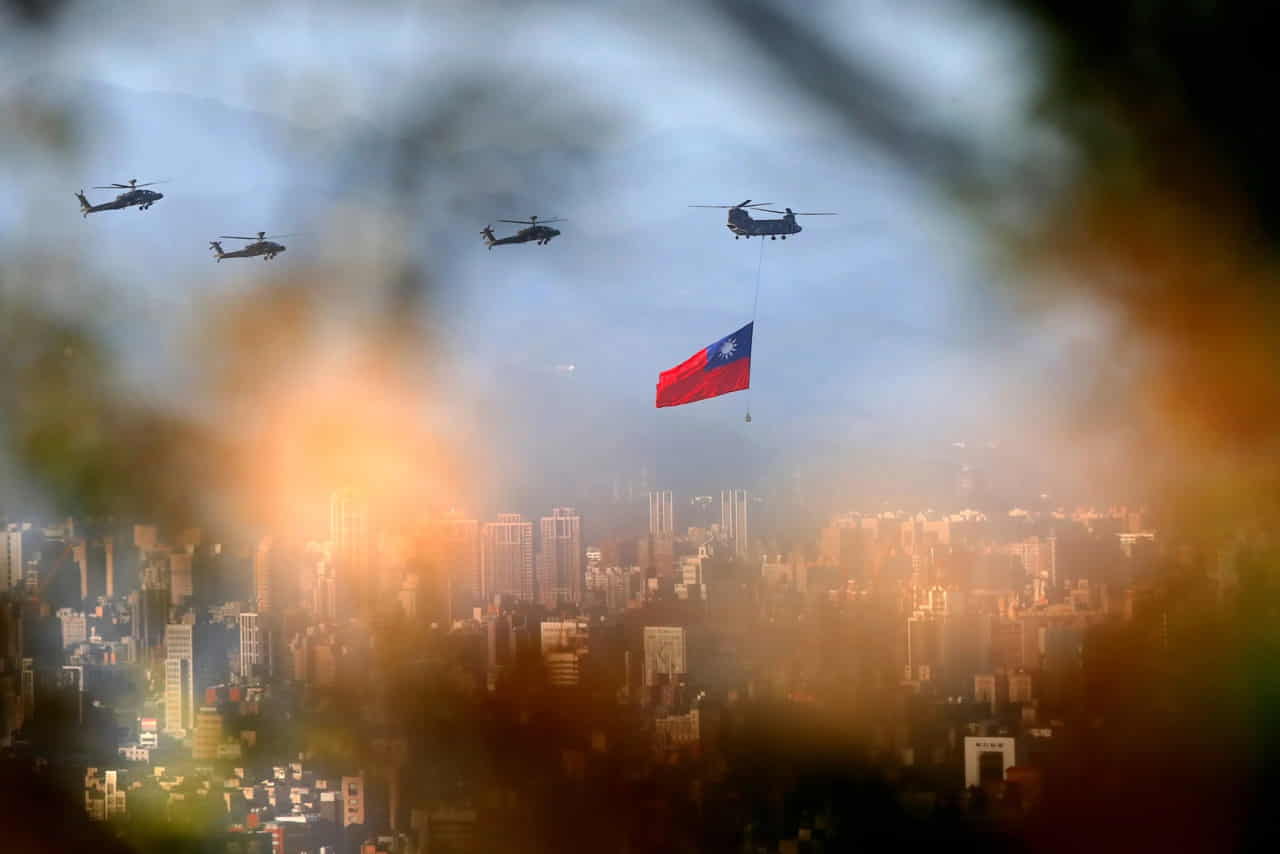
If the Middle East is the most active crisis zone and Ukraine the clearest case of prolonged industrial war, Taiwan remains the most dangerous great power flashpoint on the horizon.
The core structure of the problem is brutally simple and politically intractable. China sees Taiwan as unfinished national consolidation and a central sovereignty question. The United States sees Taiwan as strategically vital and tied directly to the credibility of its position in Asia. Taiwan sits between these pressures, trying to strengthen deterrence without provoking the war it is trying to avoid.
That is why Taiwan matters so much in any serious analysis of global conflicts. A confrontation there would not resemble a contained regional war. It would involve major naval and air operations, severe economic disruption, and potentially direct confrontation between the world’s two strongest military powers.
The semiconductor factor makes the danger even greater. Taiwan occupies a critical position in advanced chip production that supports both civilian and military systems worldwide. According to the U.S. International Trade Administration, Taiwan accounts for more than 60 percent of global foundry revenue and over 90 percent of leading edge chip manufacturing. A war there would not simply damage an island. It would hit the technological nervous system of the global economy.
China’s pressure campaign around Taiwan also illustrates a wider truth about modern conflict. War does not always begin with invasion. It can begin with encirclement, coercive signaling, cyber disruption, legal warfare, maritime pressure, and political exhaustion. The space between peace and war is no longer a line. It is a gray zone that states increasingly inhabit for years.
Alliances, Economic War, and the New Logic of Blocs
Another major driver of global conflict in 2026 is the return of bloc politics.
The post Cold War hope that alliances would slowly lose their centrality has not survived the return of hard power. Alliances matter more now because states feel more vulnerable. They seek logistics, munitions, intelligence, missile defense, industrial cooperation, and diplomatic backing. NATO itself says that in 2025 all Allies met or exceeded the 2 percent of GDP defence spending target, compared with only three Allies in 2014.
Yet alliances do not merely stabilize. They also enlarge the geometry of conflict. They raise the cost of aggression, but they can also widen wars by drawing in additional actors once credibility is perceived to be at stake.
This logic is already visible across multiple regions. European security remains inseparable from NATO. In Asia, deterrence increasingly depends on interlocking security arrangements linking the United States with Japan, Australia, South Korea, the Philippines, and others. In the Middle East, both formal and informal alignments shape what states believe they can risk and what they fear they must answer.
At the same time, economic war is no longer separate from military war. Sanctions, export controls, asset freezes, shipping restrictions, technology denial, and industrial pressure now form part of the same coercive architecture as military strikes. A state under attack is often hit simultaneously through finance, trade, insurance, supply chains, and energy exposure.
This changes how modern conflict must be measured. Damage is no longer counted only in destroyed equipment or lost territory. It is counted in blocked exports, disrupted production, inflation, capital flight, reduced access to technology, and the slow corrosion of recovery capacity.
Geography, Leadership, and the Human Error Factor
Another force driving conflict is the renewed importance of geography. Energy corridors, ports, shipping lanes, industrial hubs, rare minerals, and transit routes matter more in a fragmented world than they did in an era of confident globalization. Hormuz, the South China Sea, the Red Sea, and critical transport corridors are not peripheral details. They are central to strategic planning because they tie military power directly to economic survival. UNCTAD estimated in early 2024 that trade volume through the Suez Canal had already fallen by 42 percent over the previous two months, a reminder of how quickly chokepoint disruption now reverberates through the global economy.
But systems alone do not start wars. People do.
Leaders make decisions under pressure, often with partial information and political constraints they do not control. They misread intent. They overestimate deterrence. They underestimate pride, fear, exhaustion, and domestic compulsion. That is how crises become wars that nobody intended to become so large.
The most dangerous phase in any confrontation is often the one in which all sides still believe they can control what comes next.
History repeatedly suggests otherwise.
What Comes Next?
The world is probably not heading toward one single apocalyptic war in the immediate future.
The more realistic scenario is more exhausting and, in some ways, more dangerous. The world is moving toward permanent managed instability: recurring regional wars, prolonged gray zone confrontation, constant economic coercion, routine cyber disruption, and repeated military signaling between major powers.
Not one explosion. Continuous pressure.
That kind of world drains governments, hardens publics, and normalizes militarization. It also raises the probability of miscalculation every year because every new crisis unfolds inside an already overloaded system. Diplomacy becomes harder not because states stop talking, but because they talk inside an atmosphere of distrust thick enough to poison every negotiation before it begins.
The war around Iran may cool and reignite. Ukraine may remain a war of exhaustion. Taiwan may stay in the gray zone for years while pressure builds. Secondary crises may erupt in regions already weakened by resource stress, internal fragility, or outside intervention.
This is the future that appears most plausible from here.
Final Assessment: What Is Really Driving the World Toward War?
The answer is not one country, one ideology, or one event.
What is driving the world toward war is the erosion of restraint inside a system where power is shifting, trust is collapsing, and force once again appears politically useful.
Global conflicts in 2026 are being driven by strategic rivalry, economic weaponization, energy insecurity, military rearmament, technological compression, alliance politics, and domestic instability inside key states. The war involving Iran reflects those forces. So does Ukraine. So does the pressure building around Taiwan.
That is why this period feels different. It is not simply more violent. It is more structurally unstable.
The greatest danger is not that every major actor wants world war. The greatest danger is that too many now believe they can use force without triggering one.
That belief has destroyed eras before.
It may be preparing to destroy this one as well.